Own the network.
Not just use it.
CommonWire is a community-owned internet company forming in rural and small-town New Brunswick. Not a startup. Not a corporation. A co-operative — you would be an owner.
We are building home internet, mobile data plans, and community Wi-Fi for the places the big providers have decided are not worth serving. If you live here, you should have a say in how it is built.
CommonWire Co-op is in formation. Not yet incorporated, not yet offering services. This page collects founding member interest only.
What is a co-operative?
It is a company owned by the people who use it. Not by investors. Not by a board in a different city. By you.
When you join CommonWire, you buy a membership share — a one-time fee that makes you a part-owner of the co-op. That share gives you one vote at the annual general meeting, no matter which plan you are on or how much you pay per month.
The board of directors is elected by members, from members. They run the day-to-day. But big decisions — pricing changes, new investments, taking on debt — come to a member vote. You are not just a customer. You are a stakeholder.
If CommonWire makes more money than it costs to run in a year, that extra goes back to the people who paid into it as a patronage dividend. Think of it like getting a portion of your internet bill back at the end of the year.
Co-operatives are not new. Credit unions, agricultural co-ops, housing co-ops — they have been part of New Brunswick life since the 1930s. We are applying the same model to the one thing everyone in rural NB needs and cannot get: fast, affordable, reliable internet.
In plain terms
Membership share: You pay a one-time fee when you join (amount set by founding members). That makes you an owner. Unlike a subscription, this share has real value and can be refunded if you leave.
Monthly plan: You pay for your service like any internet provider. The difference is where the money goes — back into the network and back to members, not to shareholders in another city.
Patronage dividend: If the co-op ends the year with money left over, that surplus is shared with members based on what each person paid in. Most healthy co-ops return a portion of dues to members every year.
One member, one vote: Always. A $10/month supporter and a $65/month internet member have equal say. That is how co-ops work.
Why are we doing this?
Because Bell is not coming. Rogers is not coming. Nobody is.
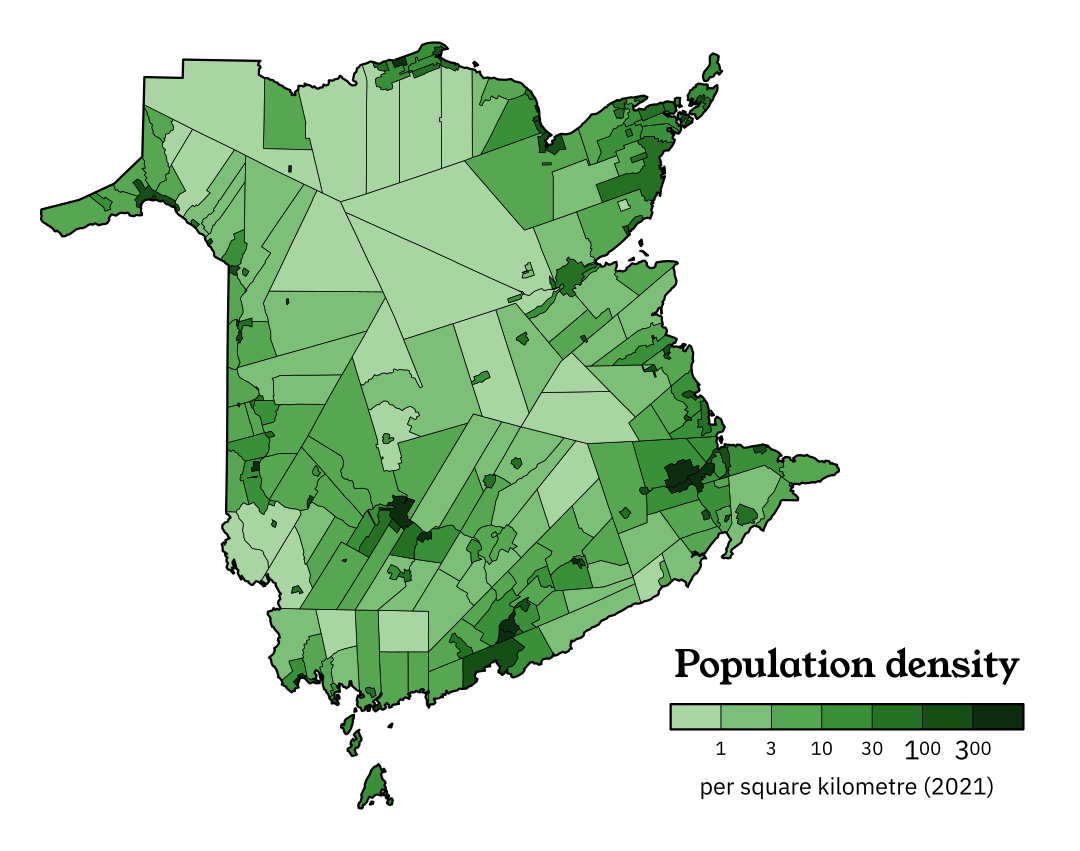
They have run the numbers. Rural New Brunswick does not have enough people per square kilometre to justify the investment. So they do not invest. The CRTC calls it commercially unviable and mostly lets them walk away.
The result: tens of thousands of New Brunswickers on 5 Mbps DSL from 2006, or satellite that costs $150 a month and drops in the rain, or nothing at all. The CRTC says every Canadian should have 50 Mbps down. Rural NB is nowhere close.
A co-op changes the math. We are not trying to generate a return for investors. We are trying to cover costs, build infrastructure, and give members the service they need. That is a completely different financial model — and it is exactly why co-ops exist in markets that private companies abandon.
What you should have: Canada's CRTC says every household should have access to at least 50 Mbps download / 10 Mbps upload. That is the minimum. Most urban Canadians get 10 to 100 times that.
What rural NB actually has: Many households in Kent County cannot get 50/10 at any price. Some are on copper DSL lines that physically cannot carry it. Others have no wired option at all.
That is not a personal problem. That is a market failure. CommonWire is the community's answer to it.
What you would actually get
CommonWire plans four types of connectivity because different households need different solutions. None are available yet — we are building the membership list first, before spending a dollar on infrastructure.
Home Internet
Wired internet to your house — through your existing phone line or a fibre cable.
We access Bell's copper and fibre network at wholesale rates — same physical lines, different billing structure. No dish on the roof. Subject to address eligibility. Not every home qualifies.
Mobile Data SIM
A data plan for your phone or a home router, negotiated as a group for a better price than any individual could get alone.
By pooling 50+ members together, we negotiate bulk rates from a carrier. Works anywhere there is cell signal — as a backup, for remote work, or as your main connection.
Community Mesh Wi-Fi
Every home internet member hosts a small Wi-Fi node that becomes part of a shared wireless network across the whole community.
When you drive past a member's property, your phone can connect through their node. When your neighbour drives past yours, same thing. The co-op manages all of it centrally — security, access, firmware updates. You just plug in the router.
Off-Grid Radio Mesh
A radio network that works with no internet and no cell towers — useful in outages and dead zones.
Low-power radio nodes create a community messaging network that functions in power outages, on farms, in woodlots, and on the water. Node hosts get membership at no monthly cost — just provide an outdoor spot and power.
Proposed membership tiers
These prices are not final. Founding members who register below will be consulted before we set anything in stone. Your input shapes what this costs.
- One vote at every AGM
- Co-op updates and meeting notices
- Off-grid radio mesh access (when live)
Back the build without taking a service
- Wired home internet (DSL or fibre)
- Community mesh Wi-Fi node at your home
- One vote at every AGM
- Annual patronage dividend
Subject to Bell wholesale address eligibility
- LTE data SIM (bulk negotiated rate)
- Community mesh Wi-Fi access
- One vote at every AGM
- Annual patronage dividend
Final price depends on SIM negotiation outcome
- Host a radio mesh node on your property
- One vote at every AGM
- You provide an outdoor spot and power
- Co-op supplies and maintains all hardware
Give us a spot on your roof. We do the rest.
How bad is your internet right now?
We are building a real dataset of connection speeds across rural and small-town NB. This data goes directly into grant applications, CRTC submissions, and our business case to funders. The more data we have, the stronger our argument.
Run a free speed test at fast.com, then enter your result in the form below. Takes 60 seconds. Every number helps.
Test your speed at fast.comGovernment and CRTC funding programs require documented proof of underservice. Self-reported data from real residents in the target area is some of the strongest evidence we can submit.
Your 3 Mbps is not just your problem. It is a data point in a pattern of market failure that we are building a case around. Include your result in the registration form below.
Register your interest
No money. No contract. No commitment. You are just telling us you exist and what you need. Founding members will be consulted on pricing, bylaws, and structure before anything is set.